
My Journey throughout the Disease
My journey with ulcerative colitis began while I was living in my van. At the time, my only symptom was blood in my stool. I had a colonoscopy done while I was living in Bend, Oregon, but I didn’t take the results too seriously and mostly ignored my symptoms. Eventually, seeing blood became normal to me, and I stopped thinking about it.
My adventurous spirit later brought me to Spain. That’s when things began to change. I started experiencing extreme fatigue, increasing pain, and continued blood in my stool.
One night in Valencia, Spain, I was sitting on the beach in a couple of old chairs my friend and I had pulled out of a dumpster and carried down to the sand. Around one in the morning we found ourselves deep in conversation, and for the first time I told someone about the symptoms I had been dealing with.
She happened to be studying pharmacy in Valencia, and when she heard what I described, she insisted that I go to the hospital and get checked out. That moment became the beginning of years of doctor visits, tests, and hospital stays.
I eventually had another colonoscopy in Valencia, and that’s when I was officially diagnosed with ulcerative colitis.
As time passed, my symptoms continued to worsen. I even spent the morning of my birthday in the hospital doing tests and speaking with doctors. Later that night I decided to at least celebrate a little and went to a small bar by myself.
Around 11 p.m., while sitting in the bar, I received a message from my doctor telling me that I needed to return home to North Carolina. She knew my story and how much traveling meant to me. While she could technically treat me there in Spain, she knew that I wasn’t doing well and that I would need the support of my family for what was likely to be a long road ahead.
As someone who had been living a nomadic life, that was the last thing I wanted to hear.
“Go back home.”
What did that even mean? To me, wherever I was in the world had always felt like home. Except the place where I grew up.
That conversation happened on a Friday night. By Sunday, I was on my way back to Charlotte, North Carolina.
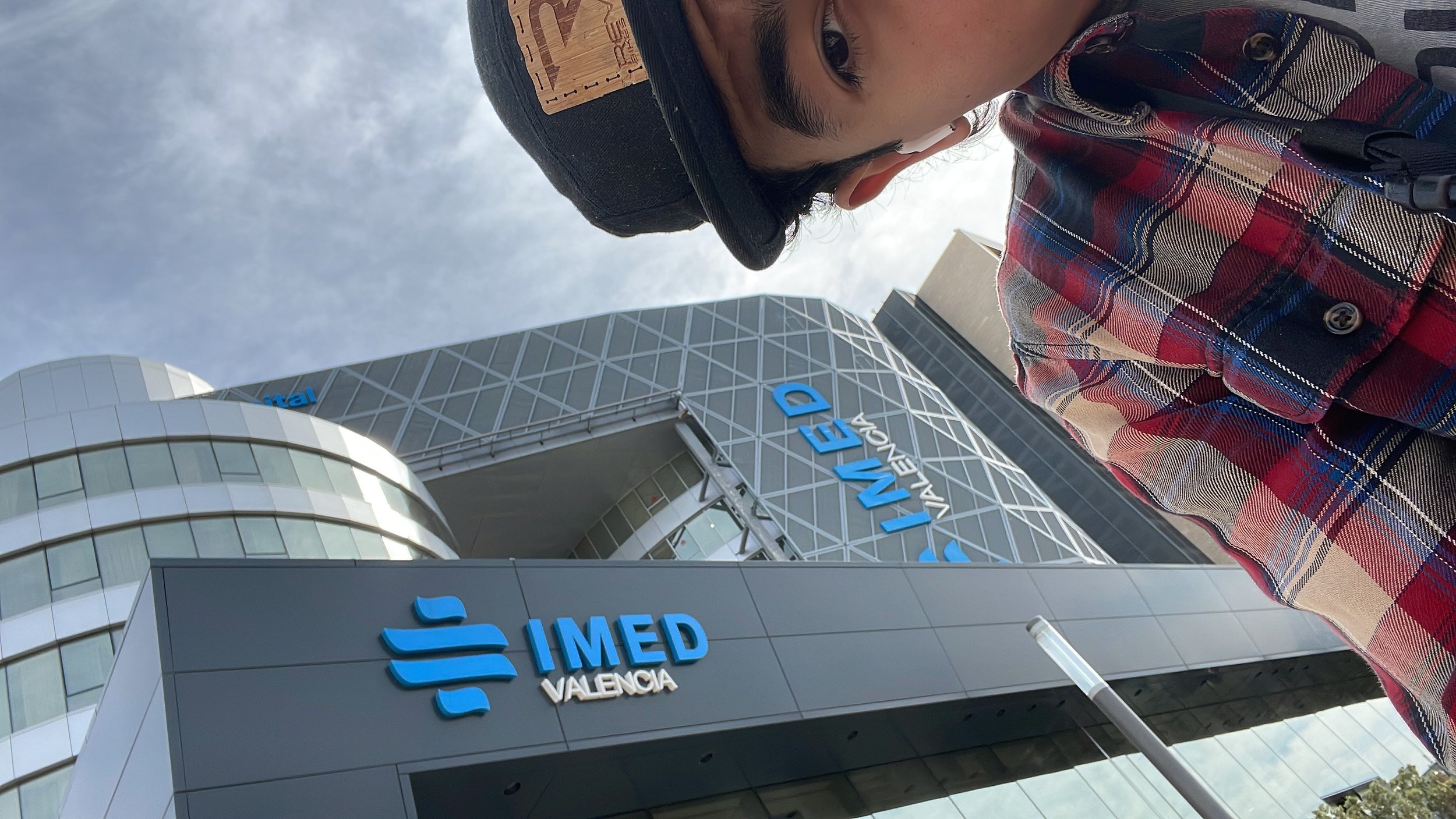
My Hospital in Spain
Going back home became the start of another journey — learning to slow down, accept help, and allow my family to support me. After leaving home at such a young age to travel the world, returning felt incredibly difficult.
I spent a few months living with my mom in Charlotte, working when I could and going to doctor appointments.
While I had been in Spain, my dad had moved to Bend, Oregon — a place that had once felt like home during my travels. After some time in Charlotte, I decided to move out to Oregon to live with him.
I made the cross-country drive from Charlotte to Bend, stopping to visit friends I had met during my years on the road. But by this point my disease had worsened significantly, and the road trip was far from enjoyable.
Once I arrived in Bend, I established care with a new doctor and began trying different treatments. I went through many medications and several biologics, while also spending long periods on high doses of steroids.
Some treatments worked for a short time, but eventually they would stop being effective. The steroids helped control the disease temporarily, but they took a heavy toll on my body.
By the beginning of 2025, things had become extremely difficult. I was going to the bathroom between 20 and 30 times a day, and many times I wouldn’t make it in time. I had to carry extra clothes with me everywhere I went.
Despite everything, I still tried my best to get outside. On hikes I would often have to stop every ten minutes to dig a small hole and use the bathroom. When spending time in town, I chose places based on how close the bathrooms were and how many stalls they had.
Slowly, I began seeing people less and less. The stress of managing my symptoms in public became overwhelming.
One thing that helped was that I was still driving my van. If I needed to, I could pull over, climb into the back, and use the bathroom. But even that became messy and frustrating because of the urgency and frequency.
Most of the time when I went to the bathroom, it was only blood.
By the summer of 2025, things became unbearable. The pain was unimaginable. I spent months in the hospital, often staying for weeks at a time. Doctors would get things under control using IV steroids, but as soon as I returned home and switched to oral steroids, my symptoms would come back.
I would be home for a week or two, then back in the hospital again.
The nice part was that I got to know many of the nurses and doctors really well. They cared deeply and did everything they could to help me through it. (Shout out to St. Charles in Bend, OR)!
Eventually, my condition became so severe and so uncontrolled that surgery was the only remaining option.
On December 17, 2025, I had a subtotal colectomy with a diverting ileostomy.
Marking the beginning of a completely new chapter.